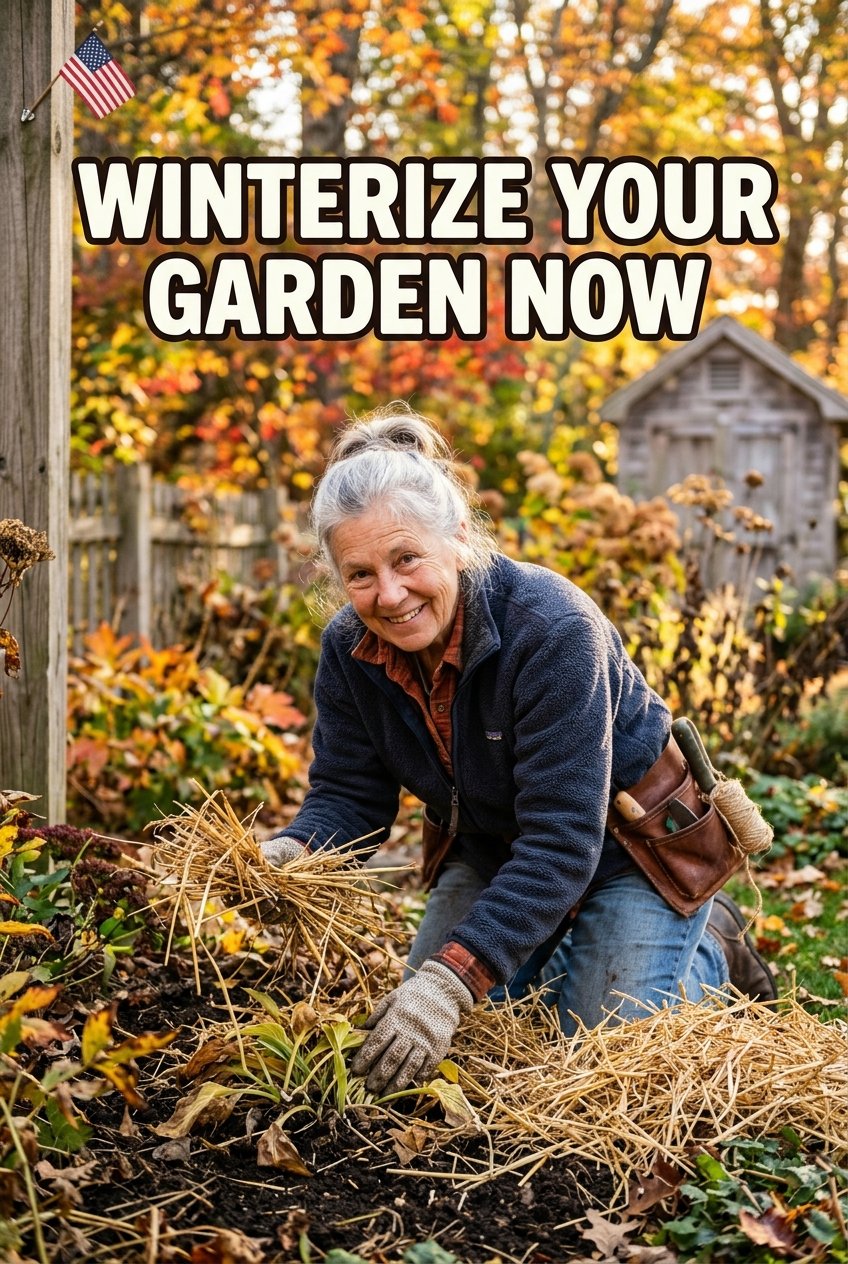
November is the month when a USA garden either rests well or struggles through winter. A few simple jobs now protect your plants, your soil, and your tools, and they save you money and work when spring arrives. This beginner’s checklist covers exactly what to do, in order, before the first hard freeze.
1. Know Your First Freeze Date
A light frost (around 32 degrees Fahrenheit) nips tender leaves, but a hard freeze (28 degrees Fahrenheit or below for several hours) can kill roots and burst outdoor pipes. Check your local forecast and your USDA zone, then plan to finish this checklist a week or two before your area’s average first hard freeze.
2. Clean Up Beds — But Not Too Much
Remove diseased plants, fallen fruit, and soggy leaves from vegetable beds, because disease and pests overwinter in that debris. Leave some healthy dried stems and leaf litter in flower beds, though — they shelter pollinators and insulate the soil. A rake, a wheelbarrow, and an afternoon are usually enough for a small yard.
3. Protect Tender Perennials
Tender plants like dahlias, cannas, and geraniums will not survive a cold winter outdoors in most zones. Dig up bulbs and tubers after the first light frost, let them dry for a day, and store them in a cool, dry place in a paper bag or box with dry peat or sawdust. For perennials staying in the ground, add 3 to 4 inches of mulch after the soil cools.
4. Mulch After the Ground Cools
Mulch too early and you insulate warm soil, which can confuse plants and invite rodents. Wait until the ground has cooled but before it freezes solid, then spread shredded bark, straw, or leaves around perennials, roses, and shrubs. Keep mulch a few inches away from stems and trunks so moisture does not rot them.
5. Plant Garlic and Spring Bulbs
November is not too late for garlic in many parts of the USA — plant cloves pointy-side up, about 2 inches deep and 6 inches apart, then mulch heavily. Spring bulbs like tulips and daffodils also go in now, before the ground freezes. They need the winter cold to bloom beautifully in spring.
6. Feed the Soil, Not the Plants
Fall is the time to improve soil, not to push new growth. Spread a 1- to 2-inch layer of compost over garden beds and let winter rain and worms work it in. Skip high-nitrogen fertilizer now — soft new growth will freeze and die back, wasting your effort.
7. Drain Hoses and Protect Outdoor Faucets
Water left in hoses and pipes expands when it freezes and can crack faucets and split hoses. Disconnect hoses, drain them, and store them in the garage. Cover outdoor faucets with foam faucet covers, which cost about $5 to $10 each at Walmart or Target, and shut off exterior water lines if your home has a shutoff valve.
8. Clean and Store Tools
Scrape soil off shovels, pruners, and hoes, wipe blades with an oily rag to prevent rust, and sharpen pruner blades before storing. Clean tools last longer and make spring work much easier. Hang tools in a dry shed or garage instead of leaving them outside.
9. Care for the Lawn
Mow one last time at your normal height, rake heavy leaf piles off the grass so they do not smother it, and overseed thin spots only if your region still has several mild weeks ahead. In cold regions, a final fall feeding with a winterizer lawn fertilizer helps roots store energy — follow the bag’s rate for your lawn size.
10. Plan Next Spring While It Is Fresh
Write down what grew well, what failed, and where you want changes. Take photos of beds now so you remember the layout when everything is bare. Order seed catalogs in winter, when the best varieties are still in stock.
November Garden Checklist at a Glance
Check your first hard freeze date; clear diseased debris from beds; lift and store tender bulbs; mulch after the ground cools; plant garlic and spring bulbs; spread compost on beds; drain hoses, cover faucets; clean, oil, and store tools; final mow and leaf cleanup; note lessons for next spring.
Frequently Asked Questions
Q: Is November too late to winterize my garden? A: Usually not, as long as the ground is not frozen solid. Work through the checklist as soon as you can, starting with hose draining and tender-plant protection, which matter most before a hard freeze. Q: Should I cut back all my perennials in fall? A: No. Leave seed heads and sturdy stems on many perennials — they feed birds, shelter insects, and catch snow that insulates roots. Cut back only diseased or mushy growth. Q: How much mulch do I need? A: A 3- to 4-inch layer is enough for most beds. One large bag of mulch (2 cubic feet) covers about 6 square feet at that depth, so measure your beds before shopping.
A November afternoon in the garden pays off all winter. Protect what you have, feed the soil, and put your tools away clean — spring will thank you.