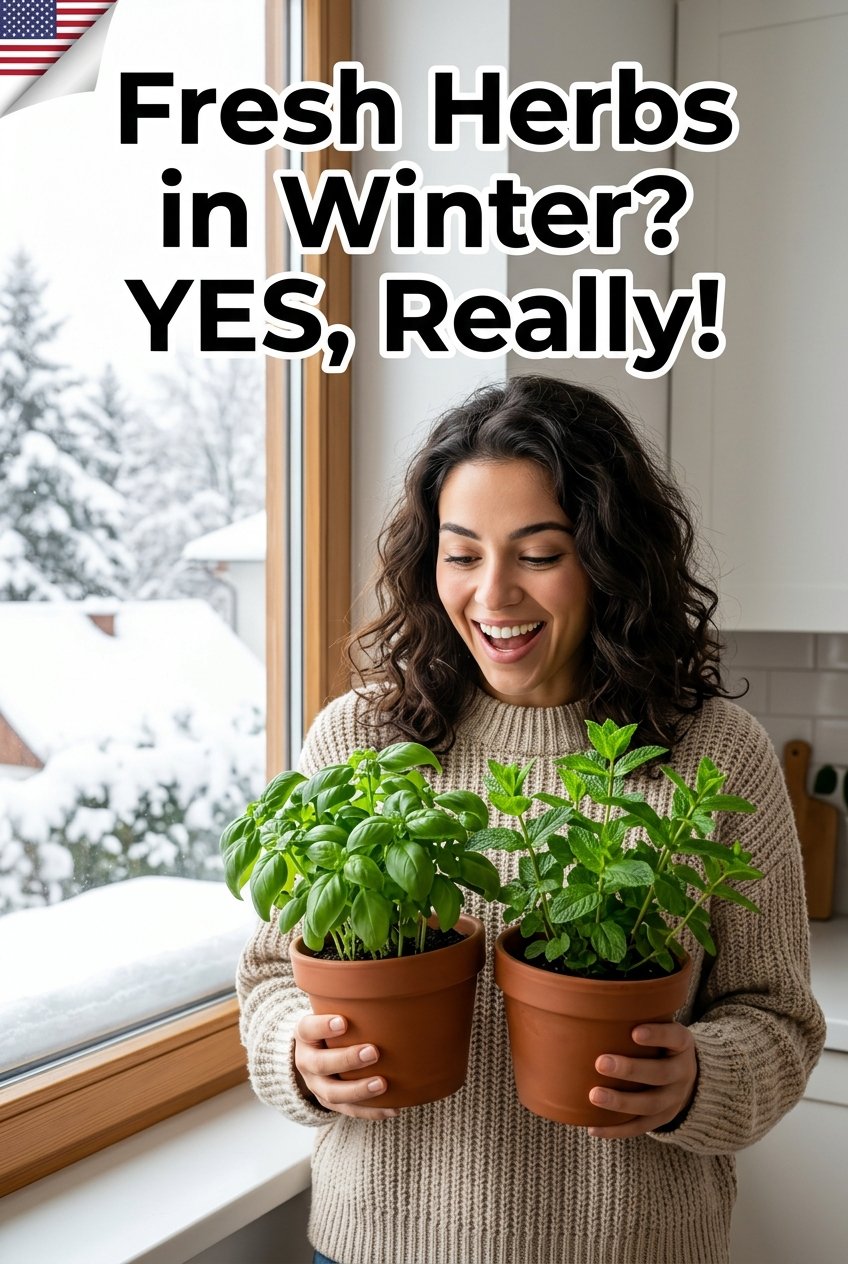
Fresh herbs in January sound impossible in most of the USA — until you move the garden indoors. A kitchen herb garden costs little, needs only a sunny windowsill or a small grow light, and puts fresh basil, mint, and parsley within arm’s reach all winter long. No yard, no greenhouse, and no gardening experience required.
1. Start With the Easiest Herbs
Begin with mint, parsley, chives, and green onions — all four are forgiving, grow fast, and tolerate the lower light of a winter windowsill. Basil and cilantro are also popular but want more sun, so add them once your first herbs are thriving. One small plant of each is plenty for a household.
2. Pick the Right Spot
A south-facing windowsill is the gold standard, giving herbs 6 hours of light even on short winter days. East- or west-facing windows work too, especially with a simple $20 to $30 LED grow light on a timer (14 hours a day mimics summer). Keep herbs away from cold drafts and radiators — steady room temperature between 65°F and 75°F is ideal.
3. Choose Containers That Drain
Herbs hate wet feet. Use pots with drainage holes and a saucer underneath, and plant in regular potting mix — not garden soil, which compacts indoors. A set of three 6-inch terracotta pots costs about $15 at Walmart or Target and looks charming on a windowsill.
4. Water Less Than You Think
The number one indoor herb killer is overwatering. Water only when the top inch of soil feels dry, and always empty the saucer so pots never sit in water. In winter, most herbs need water just once or twice a week.
5. Harvest the Right Way
Pinch leaves from the top of the plant, never strip a whole stem bare. Regular harvesting actually encourages bushier growth — the more you snip for cooking, the more the plant produces. Never take more than a third of the plant at once.
6. Grow Green Onions and Herbs From Scraps
Save money with kitchen scraps: green onion roots regrow in a glass of water on the windowsill within days, and mint cuttings root in water in about two weeks. It is a free, satisfying way to expand your garden, and kids love watching it happen.
7. Keep Pests Away Naturally
Indoor herbs rarely get pests, but tiny gnats can appear in damp soil. Let the soil dry between waterings, remove dead leaves promptly, and wipe leaves with a damp cloth if you spot anything. Avoid chemical sprays on herbs you plan to eat.
A Simple Winter Herb Starter Kit
- 3 to 4 small pots with drainage: about $15
- One bag of potting mix: about $8
- Starter plants (mint, parsley, chives): about $3 to $5 each
- Optional LED grow light: $20 to $30
Total: under $50 for fresh herbs all winter — less than a few weeks of grocery-store herb packs, which wilt in days.
Frequently Asked Questions
Do indoor herbs really grow in winter?
Yes, with enough light. A sunny windowsill or an inexpensive grow light gives herbs what they need, and indoor temperatures are actually ideal for most culinary herbs.
Which herb should a beginner start with?
Mint. It is nearly impossible to kill, grows fast, smells wonderful, and is useful in teas, desserts, and savory dishes alike. Keep it in its own pot, though — it spreads aggressively.
How long do indoor herb plants last?
Most last several months with regular harvesting, and many (like mint and chives) live for years indoors. Replace basil and cilantro every few months, since they naturally age out faster.
An indoor herb garden is one of the smallest gardening projects with the biggest daily payoff: every winter meal gets a little fresher, and the kitchen smells like a garden even when it is snowing outside.