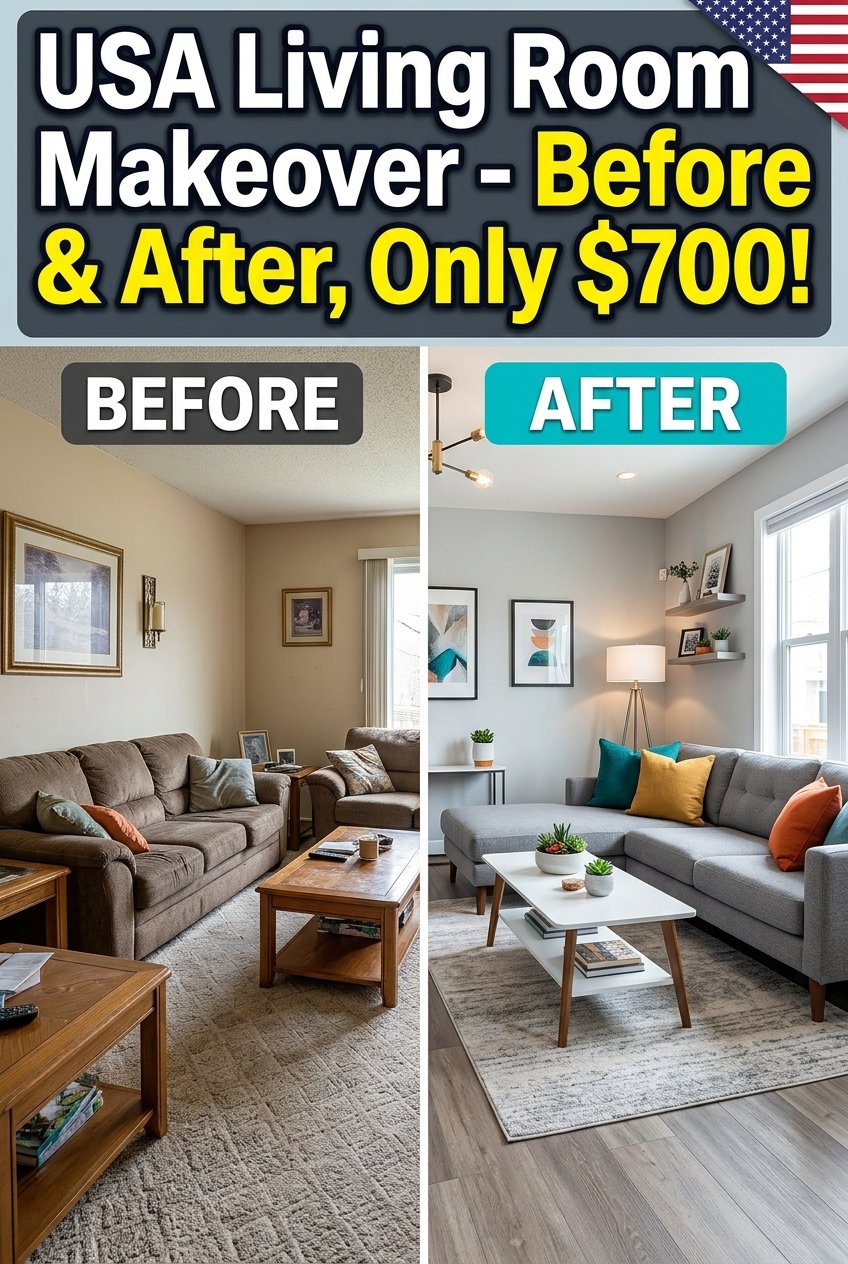
You do not need $10,000 to fall in love with your living room again. With a plan, a weekend or two of effort, and smart shopping, most American homeowners and renters can pull off a dramatic before-and-after living room makeover for under $1,000 — and often under $500. This guide walks you through the exact process, from planning to paint to the finishing touches, with a realistic cost breakdown in US dollars.
Step 1: Plan Before You Spend a Dime
Every good makeover starts with a plan, not a shopping cart. Here is how to set yourself up for success:
- Take honest “before” photos. Snap your room in daylight from the doorway and each corner. Photos reveal clutter and awkward layouts your eyes have learned to ignore.
- Measure everything. Note room dimensions, window sizes, and the footprint of furniture you are keeping. A $10 tape measure from Walmart prevents costly mistakes.
- Pick one style word. Cozy modern, farmhouse, boho, minimal — choose one word and let it guide every purchase. This single decision stops impulse buys that clash later.
- Set a hard budget. Write down your total (for example, $750) and assign amounts to categories: paint $80, lighting $120, textiles $150, decor $150, furniture $250. Track spending in a notes app as you go.
- Make a keep list. Most living rooms already own 60% of what they need. List what stays, what gets a refresh (paint, new hardware), and what truly must be replaced.
Step 2: Paint — The Biggest Bang for Your Buck
Nothing transforms a room faster than paint. A gallon of quality interior paint costs $35–$55 at Home Depot or Lowe’s, and most living rooms need just two gallons plus primer.
- Choose light, warm neutrals (greige, warm white, soft sage) to make the room feel larger and brighter — especially important in older US homes with smaller windows.
- Paint one accent wall if a full repaint feels like too much. Deep navy, forest green, or terracotta add drama for under $50.
- Don’t skip the ceiling. A fresh coat of flat white ceiling paint ($25–$30 a gallon) instantly brightens the whole space.
- Paint in the right conditions. Latex paint cures best between 50°F and 85°F with low humidity — open windows for ventilation and expect 2–4 hours of dry time between coats.
Step 3: Rearrange and Refresh Your Furniture
Before buying anything, try the free makeover: a new layout.
- Float the sofa. Pulling furniture a few inches off the walls makes even small living rooms feel intentional and spacious.
- Create a focal point. Arrange seating to face the fireplace, the TV wall, or a large window — not scattered randomly.
- Shop your own home. That bedroom chair, the dining room lamp, or a bookshelf from the hallway might be perfect in the living room.
- Buy secondhand first. Facebook Marketplace, OfferUp, Goodwill, and Habitat for Humanity ReStores are goldmines. A solid wood coffee table that costs $300 new at Target often sells for $40–$75 used.
- Refresh instead of replace. Slipcovers ($40–$90 on Amazon) rescue a tired sofa. A $15 can of spray paint and new $3 knobs transform a dated side table.
Step 4: Fix the Lighting
Bad lighting makes even nice furniture look dull. Aim for three light sources at different heights:
- Overhead: Swap a dated “boob light” for a modern flush-mount or a budget pendant ($40–$80 at IKEA, Target, or Lowe’s).
- Task: Add a floor lamp beside your reading chair ($35–$60).
- Ambient: Table lamps or plug-in wall sconces warm up dark corners ($25–$45 each).
- Go warm. Choose 2700K–3000K “warm white” LED bulbs — they flatter skin tones and make the room feel cozy, unlike harsh daylight bulbs.
Step 5: Layer Textiles and Decor
This is where the “after” photo magic happens, and it is the cheapest phase:
- Rug: A 5×7 area rug anchors the seating zone. Budget picks run $80–$150 at IKEA, Walmart, or Rugs USA. Go big enough that front furniture legs sit on it.
- Curtains: Hang curtain panels high and wide — the rod 4–6 inches above the window frame — to make windows look larger. IKEA RITVA panels are about $15 a pair.
- Throw pillows: Mix 3–5 pillows in your style word’s palette ($8–$15 each at Target, HomeGoods, or TJ Maxx).
- Throw blanket: One textured throw draped over the sofa arm ($20–$35) adds instant coziness.
- Wall art: Frame free printables, your own photos, or thrift-store art in matching frames. A gallery wall of 4–6 frames costs under $60.
- Greenery: One large faux plant ($25–$40) or a few real low-maintenance plants like pothos ($8–$12) bring the room to life.
Step 6: Declutter and Style the Details
The difference between “before” and “after” is often just editing. Remove 30% of the small items on shelves and tables, then style what remains in odd-numbered groups of three. Corral remotes and clutter in a $10–$15 decorative tray or basket. Hide cords with $8 cable covers from Amazon. These tiny fixes photograph beautifully and cost almost nothing.
Realistic Cost Breakdown
Here is what a typical $750 budget makeover looks like in the US:
- Paint and supplies (2 gallons + primer + rollers): $110
- Secondhand coffee table (Facebook Marketplace): $60
- Sofa slipcover: $70
- 5×7 area rug (IKEA/Walmart): $120
- Curtains and rod: $45
- Floor lamp + 2 table lamps: $110
- Throw pillows and blanket: $70
- Wall art frames and prints: $55
- Plant, tray, cable covers, misc: $60
- Total: about $700
Doing the painting and styling yourself keeps labor at $0 — professional painters charge $300–$800 per room, so DIY is the single biggest saver.
Frequently Asked Questions
How long does a budget living room makeover take?
Most people finish in one to three weekends. Plan one weekend for decluttering and painting, and another for shopping, arranging, and styling.
Can renters do a living room makeover?
Absolutely. Focus on removable changes: rugs, curtains, lighting, slipcovers, and peel-and-stick wallpaper. Always check your lease before painting, or use temporary solutions.
What is the cheapest way to make a living room look expensive?
Matching frames, consistent warm lighting, decluttered surfaces, and one large rug. Cohesion reads as luxury — mismatched clutter reads as cheap, no matter what you spent.
Should I buy furniture new or used?
Buy wood furniture used (it is built to last and easy to refinish) and soft items like rugs and pillows new for hygiene. Always inspect secondhand upholstery carefully before bringing it home.
What paint finish is best for living room walls?
Eggshell or satin. They hide minor wall flaws, wipe clean easily, and look richer than flat paint — ideal for busy family living rooms.